

Kitchen and Cooking Knife Care
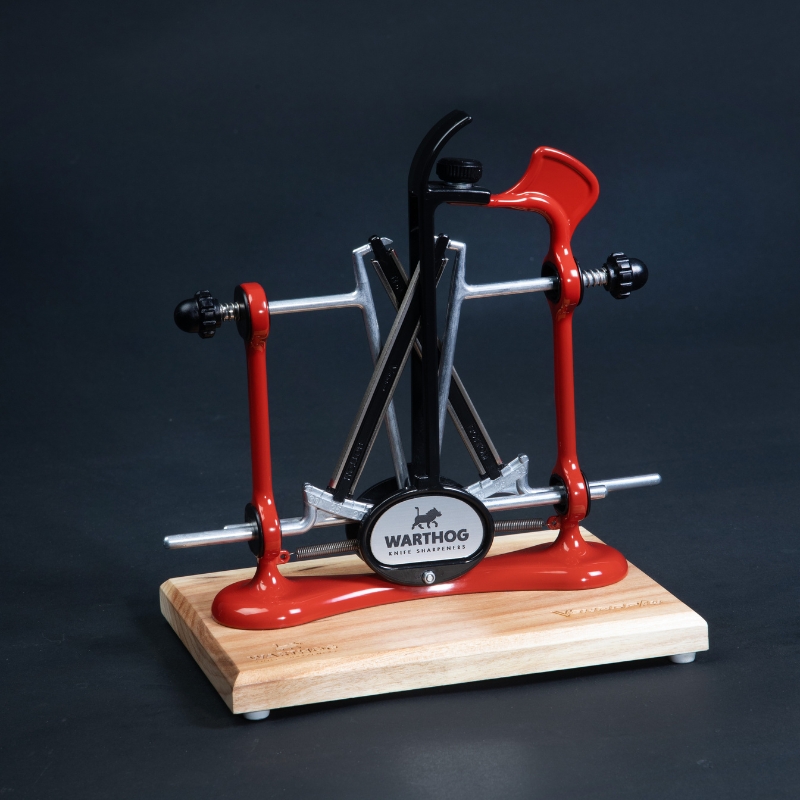
Preserving your perfect Warthog V-Sharp edge can shape your entire cooking experience.
Cleaning and Drying
Hand wash only:
Never put knives in the dishwasher; heat and harsh detergents dull blades, chip edges, and ruin handles.
Wash immediately:
Clean your knife using mild dish washing soap, warm water and a soft sponge.
Avoid the sink:
Do not drop knifes into a sink full of soapy water where you cannot see them – you can get yourself cut if you to put your hand in the water where you cannot see the knives.
Dry right away:
Wipe blades completely dry with a soft cloth immediately to prevent water spots and rust.
Acid wipe-down:
Rinse and wipe carbon steel blades dry immediately after cutting acidic foods like lemons, tomatoes and onions.
Oil carbon steel:
If storing carbon steel or outdoor blades, apply a light coat of food safe oil (such as mineral oil) to protect the blades from coastal humidity.
Patina on high carbon steel:
A dark layer builds up on the blade- this is a protective layer and is not a bad thing.
Storage to preserve your perfect Warthog V-Sharp edge.
Cutlery drawer
Sharp knives in a draw with other eating utensils or cutlery, contact with these can often cause your knives to chip, break or even become dull. If the edge is inspected of knives that have been stored in a cutlery drawer with other eating utensils it usually shows shiny spots, those are flat spots that reflect light and it means that the edge has been ruined on those areas.
Cutlery drawer
If a cutlery drawer is your only option invest in knives heats or blade guards.
Leather or canvas knife roll bag
Is perfect for the chef-on-the-move.
Magnetic knife holder or strip
Is a space savvy solution available from your Warthog store
Counter knife block
Is a neat and easy to reach solution.
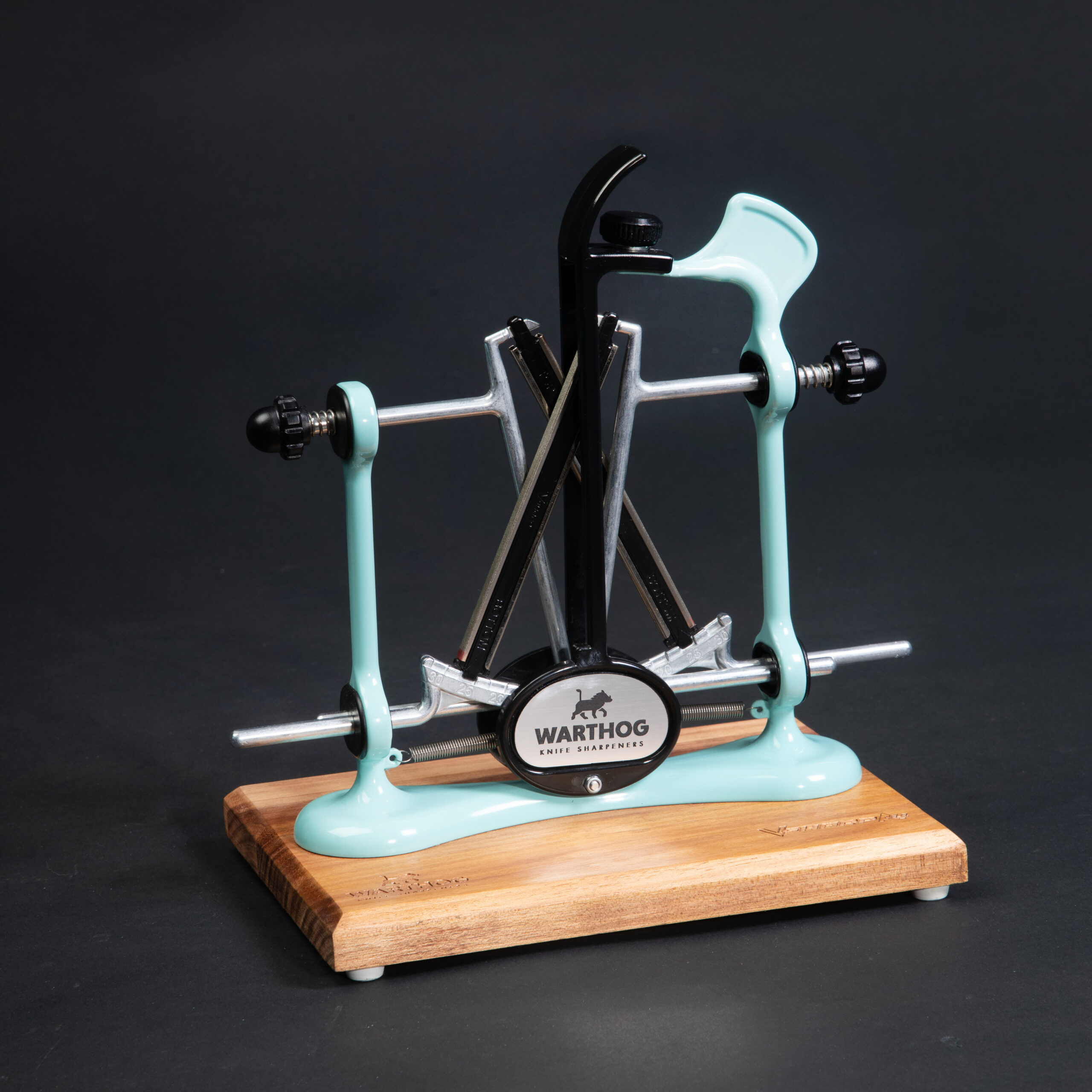
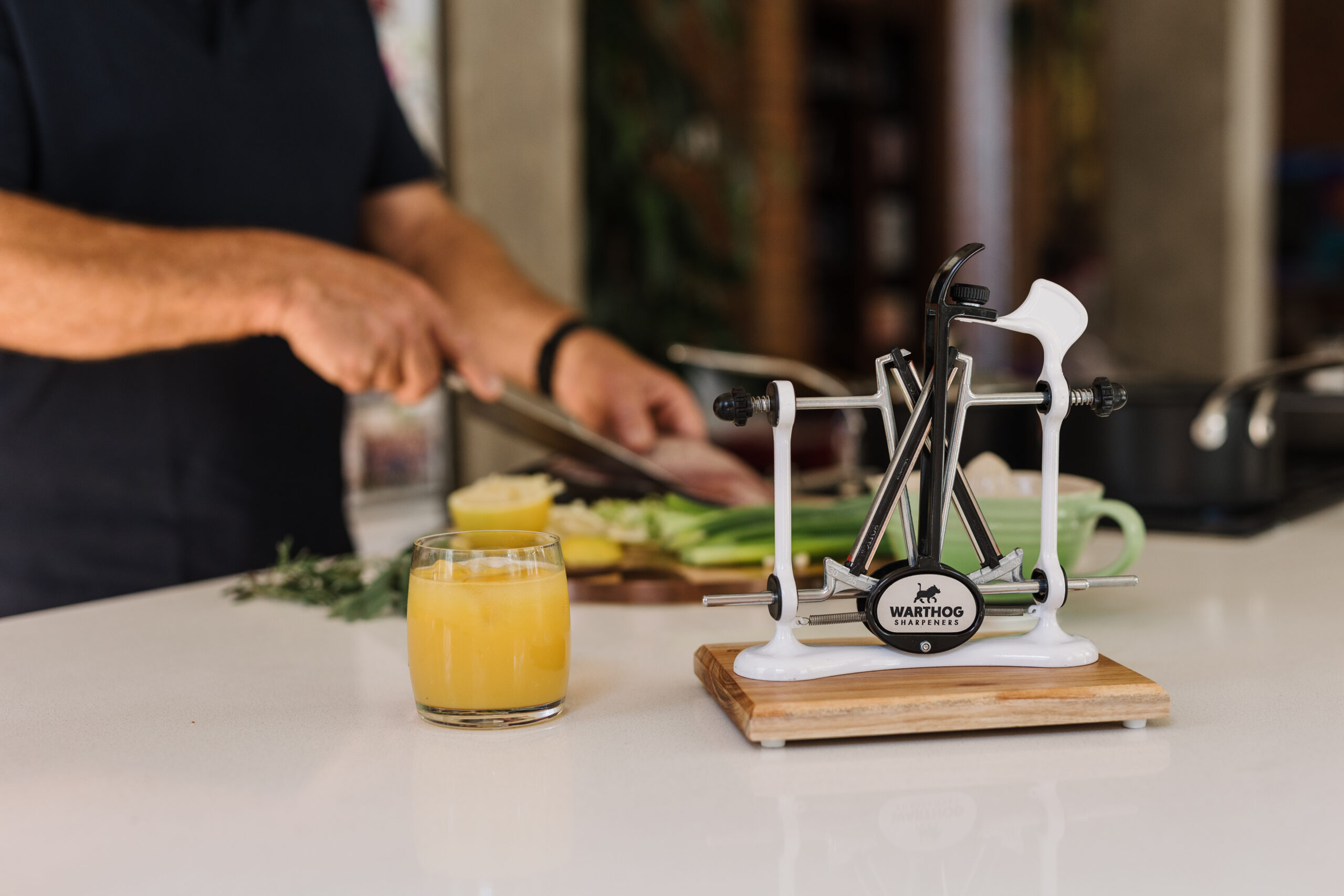
Chopping on the right surfaces to preserve your perfect Warthog edge.
Never cut on
Glass, stainless steel or granite cutting boards or surfaces it will ruin your perfect edge in one cut.
Wooden cutting boards
Made from bamboo or from the end grain of oak or blackwood, are knife friendly, stylish, and have natural antimicrobial properties making them a durable choice. Available at your Warthog store.
Plastic cutting boards
Are gentle on your knives, easy to clean and budget friendly
Hunting and Pocketknife care.
1. Cleaning Immediately After the Hunt. Blood, fat, and acidic fluids from field dressing will aggressively corrode even high-grade stainless steel if left untouched.
- Hand-wash only: Wash the blade immediately after use with warm water and a few drops of dishwashing liquid and a soft sponge.
- Never soak the knife: Avoid submerging the knife in a sink or basin, as water can seep under the handle scales and cause hidden rust or warping.
- Remove stubborn residue: Use a soft microfiber cloth. To clean off dried blood or sticky plant sap without scratching the steel, use a splash of acetone on the metal, taking care not to touch synthetic or wooden handles.
- Dry completely: Wipe the blade completely dry with a clean cloth. Do not leave it to air-dry on a rack.
2. Rust prevention & Oiling
- For general storage: Protect the blade with a thin layer of specialized knife oil or high-grade gun oil. ( like Ballistol)
- For biltong and meat prep: If you use your hunting or pocketknife to slice food or carve biltong avoid toxic oils. Instead, use a food-safe choice like pharmaceutical grade liquid paraffin / mineral oil.
- Damascus blades: Avoid using abrasive metal polish or steel wool, as they can scrub away the distinct etched pattern.
3. Handle Material Maintenance
- Wood handles: Periodically rub the handle with quality wood wax like Woodoc Furniture Wax to prevent the wood from drying out and cracking in dry heat.
- Leather washer handles. Treat them sparingly with a small amount of mink oil or raw linseed oil to keep the leather supple.
- Synthetic handles (G10/Micarta): these are highly resilient but should be washed with warm soapy water and dried fully to prevent sweat and grime build-up.
4. The golden Rule of Knife Storge
- Never store your knife inside its leather sheath: Leather naturally absorbs moisture from the air, and the chemicals acids used during the tanning process react with the atmosphere, accelerating severe pitting and corrosion of the blade.
- Proper storage: Store your knife next to its sheath in a dry interior environment such as a dedicated storage box. Tos a few silica gel packets into the storage box to absorb excess atmospheric humidity.
5. Removing light Rust
If you spot minor surface rust or discoloration.
- Apply a small amount of metal polish like Brasso or Simichrome polish to the blade and rub gently in circular motion with a soft cloth.